

Have you ever craved the perfect balance of tangy, savory, and sweet flavors that make authentic Pad Thai so irresistible? This dish has become a staple of Thai cuisine worldwide, but crafting an Authentic Pad Thai Recipe at Home can seem daunting. Fear not! With the right ingredients and step-by-step instructions, you can create this classic dish in your kitchen, elevating your culinary skills and impressing your loved ones.

Ingredients List
Gather the freshest ingredients for the most authentic taste. Here’s what you’ll need for your Authentic Pad Thai Recipe at Home:
- 8 oz rice noodles
- 2 tbsp vegetable oil
- 1 cup firm tofu, cubed (can substitute with chicken or shrimp)
- 2 eggs, lightly beaten
- 2 cups bean sprouts
- 1 cup chopped chives or scallions
- 1/4 cup peanuts, crushed
- 1/4 cup tamarind paste
- 2 tbsp fish sauce (or soy sauce for a vegetarian option)
- 1 tbsp sugar
- Red chili flakes, to taste
- Lime wedges, for serving
Feel free to adjust the ingredients based on your preferences—whether you’re vegan, gluten-free, or want to manage your carbs, the Authentic Pad Thai Recipe at Home allows for creativity!
Timing
Preparing and cooking an authentic Pad Thai is quicker than you think! Here’s how it breaks down:
- Preparation Time: 20 minutes
- Cooking Time: 15 minutes
- Total Time: 35 minutes
That’s about 20% less time than many of the restaurant’s recipes, allowing you to enjoy a home-cooked experience faster than a takeout wait!
Step-by-Step Instructions
Step 1: Prepare the Ingredients
Begin by cooking the rice noodles according to package directions. Strain and set aside. While they are cooking, chop up your tofu, scallions, and any additional veggies you wish to include. Having everything prepped will make following this Authentic Pad Thai Recipe at Home much easier.
Step 2: Cook the Tofu
In a large skillet or wok, heat the vegetable oil over medium heat. Add the cubed tofu and sauté until golden brown on all sides, about 5-7 minutes. This adds flavor and prepares the tofu perfectly for the stir-fry. 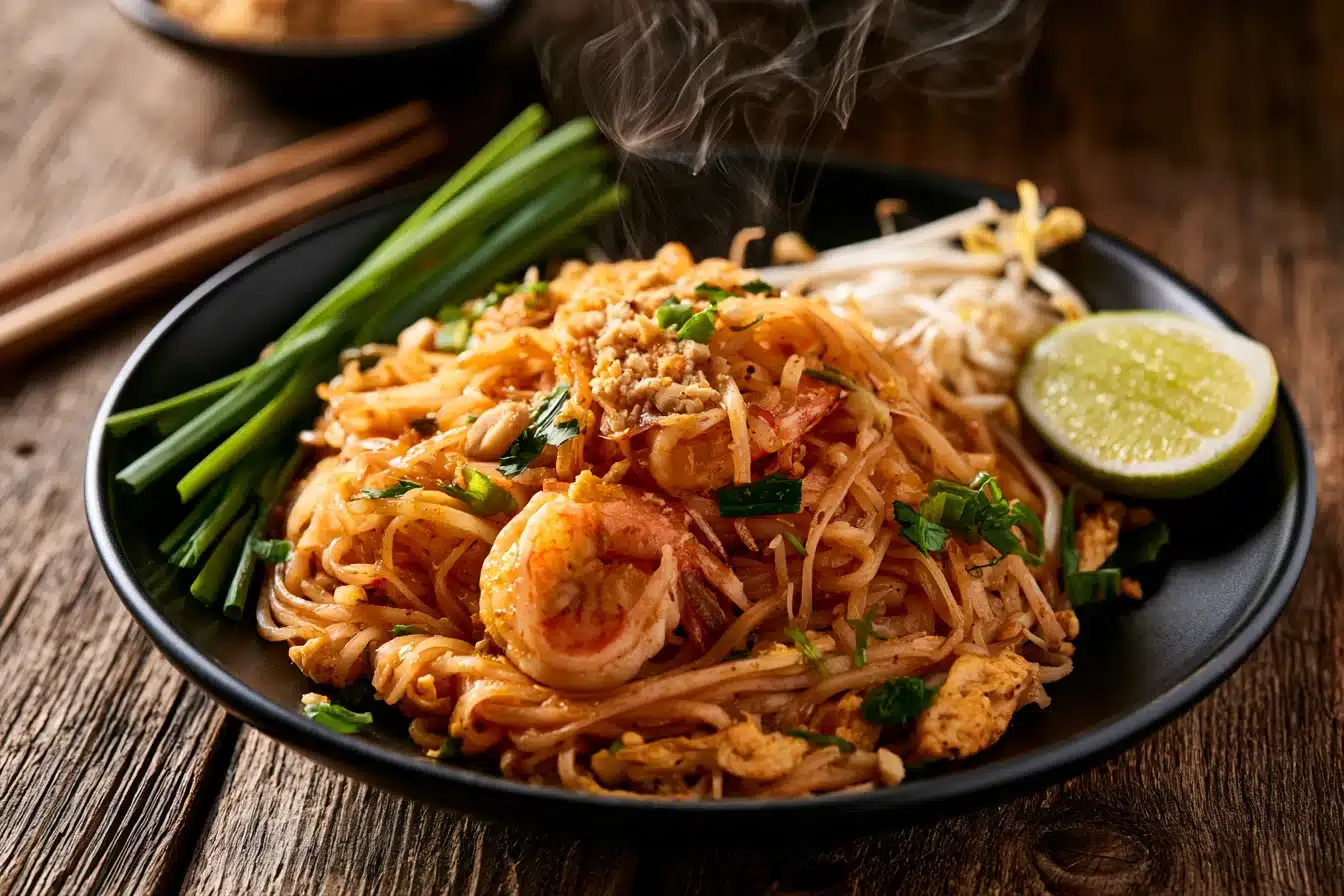
Step 3: Scramble the Eggs
Push the tofu to one side of the skillet and pour in the beaten eggs. Scramble them until they’re just cooked, then mix everything together.
Step 4: Add the Noodles and Sauce
Now, it’s time to add the rice noodles. Pour in the tamarind paste, fish sauce, and sugar. Toss everything to coat the noodles evenly.
Step 5: Final Touches
Add the bean sprouts and scallions last, cooking just long enough to warm them through. This gives the dish a nice crunch!
Nutritional Information
Here’s what a serving of your Authentic Pad Thai Recipe at Home offers:
- Calories: 350
- Protein: 12g
- Carbohydrates: 55g
- Fats: 10g
- Fiber: 3g
- Vitamin A, C, Iron, & Calcium: Good levels
Nutrition can vary based on your specific ingredients and substitutions, so consider this a general guideline!
Healthier Alternatives for the Recipe
If you’re looking to lighten up your Authentic Pad Thai Recipe at Home, consider these substitutions:
- Instead of tofu, grated zucchini or chickpeas can add protein while keeping calories lower.
- Swap fish sauce for a homemade vegan version using a mix of soy sauce and a hint of lime juice.
- Switch out regular noodles for zucchini noodles or whole-grain noodles for added nutrients.
These variations maintain the essence of your dish while keeping it health-conscious.
Serving Suggestions
To serve your Authentic Pad Thai Recipe at Home like a pro:
- Plate the Pad Thai on a large serving dish and sprinkle crushed peanuts over the top along with fresh lime wedges.
- Add a side of fresh spring rolls for a complete meal.
- Pair it with Thai iced tea or a refreshing lemongrass-infused drink.
These options create a vibrant and inviting meal that everyone will enjoy!
Common Mistakes to Avoid
- Using stale noodles—make sure they’re fresh to achieve the perfect texture.
- Overcooking the vegetables—keeping them crunchy enhances the overall dish.
- Not allowing the ingredients to caramelize slightly before adding sauce—this step is crucial for flavor.
Storing Tips for the Recipe
Storing leftovers from your Authentic Pad Thai Recipe at Home is simple:
- Refrigerate leftovers in airtight containers for up to 3 days.
- For longer storage, freeze the dish without the sprouts and nuts for up to 2 months.
- To reheat, thaw overnight in the fridge and heat in a skillet over medium until warmed through.
Conclusion
Crafting an Authentic Pad Thai Recipe at Home is not only feasible but rewarding! With fresh ingredients and simple steps, you can create a dish that rivals your favorite restaurant. Remember to adjust the recipe to fit your dietary needs and explore the many delightful variations. Don’t forget to share your experiences and any personal twists you add to the recipe!
FAQs
Can I make Pad Thai vegetarian or vegan?
Absolutely! Simply substitute the fish sauce with soy sauce or a vegan alternative, and opt for tofu or veggies instead of meat.
What type of noodles should I use?
Traditional Pad Thai is made with rice noodles. You can find them in various widths; thin rice noodles are most commonly used.
Is Pad Thai gluten-free?
Yes, if you use gluten-free rice noodles and fish sauce, Pad Thai can easily be made gluten-free!
Can I add more vegetables to the Pad Thai?
Definitely! Feel free to include bell peppers, carrots, or zucchini for added nutrition and flavor.
How can I adjust the spiciness of the dish?
You can control the spice level by adjusting the amount of red chili flakes you add or serving with chili sauce on the side.
What’s the best way to serve Pad Thai?
Serve hot from the stove with lime wedges, fresh herbs, and crushed peanuts for garnish. This adds flavor and makes for a beautiful presentation.
Can I meal prep Pad Thai?
Yes, you can prepare the individual components in advance. Just keep everything separate and combine right before serving for the best texture!