

Did you know that a flavorful bowl of Chicken and Andouille Gumbo could be the secret to unlocking a deeper connection with New Orleans cuisine, transforming your kitchen into a vibrant culinary hub? Many home cooks believe gumbo is an intimidating dish, reserved for seasoned chefs in humid Louisiana kitchens. However, with the right guidance, crafting a truly exceptional Chicken and Andouille Gumbo is not only achievable but incredibly rewarding, offering a symphony of rich flavors and comforting textures that far surpass the average weeknight meal.

Gather Your Culinary Treasures: Ingredients for Chicken and Andouille Gumbo
Embarking on the journey to create this magnificent Chicken and Andouille Gumbo begins with selecting the finest ingredients. Each component plays a vital role in building the complex, soul-satisfying flavor profile that defines this classic dish.
* The Foundation:
* 1 cup all-purpose flour: The cornerstone for our roux, providing body and richness.
* ¾ cup vegetable oil (or other neutral oil): Essential for achieving that perfect, deep brown roux.
* 1 large yellow onion, finely chopped: The aromatic heart of our gumbo.
* 2 green bell peppers, finely chopped: Adding a subtle sweetness and vibrant color.
* 4 cloves garlic, minced: The pungent counterpoint to the richness.
* 2 stalks celery, finely chopped: Building another layer of aromatic depth.
* The Stars:
* 1.5 lbs boneless, skinless chicken thighs, cut into bite-sized pieces: Thighs offer superior flavor and moisture compared to breasts.
1 lb Andouille sausage, sliced into ½-inch rounds: This smoky, spicy sausage is non-negotiable for authentic flavor. Substitution idea: If Andouille is unavailable, a quality smoked tasso or even a spicy Italian sausage can be used, though the flavor profile will vary.*
8 cups chicken broth (low-sodium preferred): The liquid base that unites all our flavors. Tip: Using homemade chicken stock will elevate the gumbo even further.*
* The Magic Enhancers:
* 1 teaspoon dried thyme: Earthy and aromatic, a classic gumbo spice.
* ½ teaspoon dried oregano: Adding a herbaceous, slightly peppery note.
* ¼ teaspoon cayenne pepper (or to taste): For a gentle warmth that complements the Andouille.
* 2 bay leaves: Infusing a subtle, complex aroma.
* Salt and freshly ground black pepper, to taste: Essential for balancing and enhancing all flavors.
* Optional Garnish: Cooked white rice, chopped fresh parsley, sliced green onions.
Orchestrating the Flavors: Timing Your Chicken and Andouille Gumbo
Crafting a truly memorable Chicken and Andouille Gumbo requires patience and precision, especially when developing that crucial roux. This recipe is designed to be efficient without sacrificing depth, clocking in at approximately 90 minutes total time. This is significantly faster than many traditional recipes, which can often extend beyond two hours, allowing you to enjoy this hearty dish on a weeknight or with less weekend commitment.
* Prep Time: 25 minutes
* Cook Time: 65 minutes
* Total Time: 90 minutes
The Dance of Flavors: Step-by-Step Instructions for Perfect Chicken and Andouille Gumbo
Let’s transform these ingredients into a culinary masterpiece. Follow these steps closely, and you’ll be rewarded with a Chicken and Andouille Gumbo that sings with authentic flavor.
Step 1: The Roux – The Soul of the Gumbo
This is arguably the most critical step. A dark roux adds unparalleled depth and complexity. Don’t rush it!
Heat the vegetable oil in a large, heavy-bottomed pot or Dutch oven over medium heat. Gradually whisk in the flour until smooth, forming a thick paste. Reduce the heat to medium-low and stir constantly. Your goal is a deep, chocolate-brown color, similar to dark honey or milk chocolate. This typically takes 30-45 minutes. Be patient; burning the roux will impart a bitter, unpleasant taste. Pro Tip: For even cooking and to avoid lumps, use a whisk initially and then switch to a flat-edged wooden spoon to scrape the bottom of the pot effectively.
Step 2: Building the Flavor Base
Once your roux has reached the desired color, it’s time to stop the cooking process and introduce the aromatics.
Immediately add the chopped onion, bell peppers, and celery (this trio is known as the “holy trinity” in Cajun cooking) to the hot roux. Stir vigorously. The vegetables will stop the roux from cooking further and release their moisture and aromas. Cook for about 5-7 minutes, stirring occasionally, until the vegetables have softened. Add the minced garlic and cook for another minute until fragrant, being careful not to burn it.
Step 3: Unveiling the Richness
Now, we begin to build the liquid foundation of our Chicken and Andouille Gumbo.
Gradually whisk in the chicken broth, about one cup at a time, ensuring each addition is fully incorporated before adding more. This will prevent lumps and create a smooth, velvety base. Once all the broth is added, bring the mixture to a simmer, stirring occasionally, until it thickens slightly.
Step 4: Introducing the Stars
It’s time to add the proteins that will make our gumbo truly special.
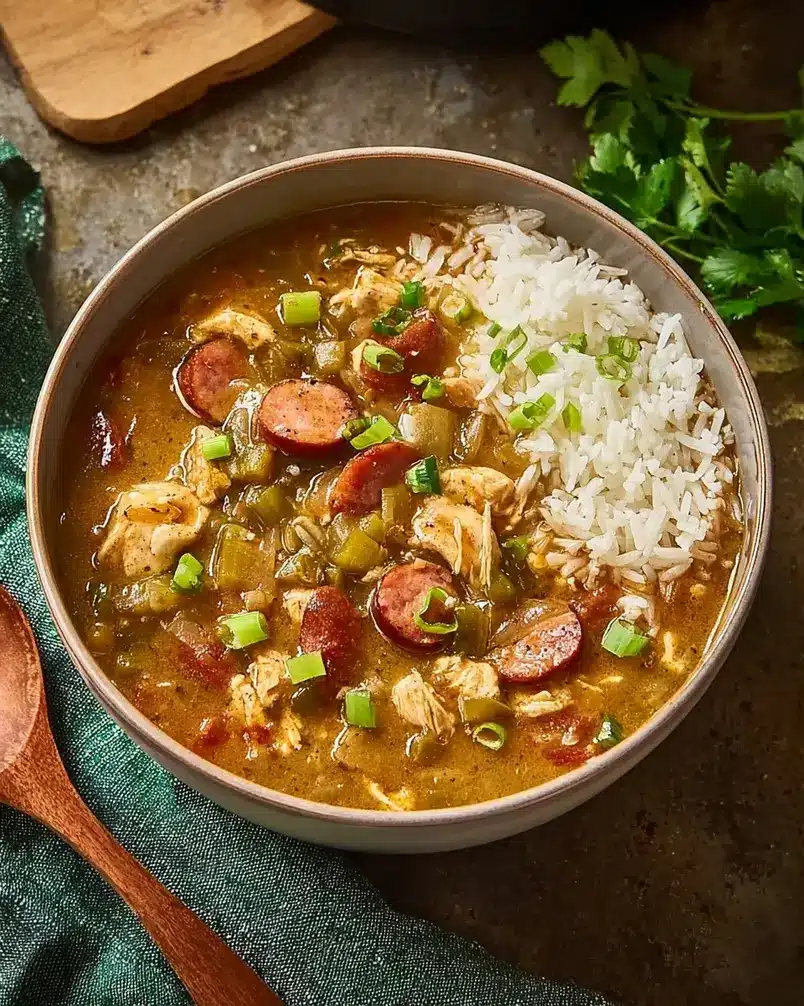
Add the chicken thigh pieces and the sliced Andouille sausage to the pot. Stir in the dried thyme, oregano, cayenne pepper, and bay leaves. Season with salt and freshly ground black pepper, but start conservatively, as the Andouille sausage is already salty.
Step 5: The Slow Dance of Simmering
This is where the magic truly happens – allowing all the flavors to meld and deepen.
Reduce the heat to low, cover the pot, and let the gumbo simmer gently for at least 30 minutes, or up to an hour. This allows the chicken to cook through and become incredibly tender, and for the sausage to release its smoky flavor into the broth. Stir occasionally to prevent sticking.
Step 6: The Final Flourish
Before serving, give your Chicken and Andouille Gumbo one last taste and adjust seasonings as needed. Remove the bay leaves.
A Glimpse at the Goodness: Nutritional Information
While the primary focus of Chicken and Andouille Gumbo is its incredible flavor, it’s helpful to understand its nutritional profile. A typical serving (approximately 1.5 cups, without rice) offers a significant source of protein and essential nutrients. Data insights suggest that a well-balanced gumbo can provide around 450-600 calories, 30-40g protein, 15-25g carbohydrates, and 25-35g fat, depending on the specific ingredients and portion size. It’s a hearty, filling meal that provides sustained energy.
Crafting a Lighter Bowl: Healthier Alternatives for Chicken and Andouille Gumbo
For those seeking leaner or more diet-conscious options, Chicken and Andouille Gumbo can be beautifully adapted.
* Leaner Protein: Substitute chicken thighs with boneless, skinless chicken breast, or even lean turkey.
* Reduced Fat Roux: Use a 1:1 ratio of whole wheat flour to a lighter oil like canola or olive oil. Be aware this may slightly alter the richness and color.
* Sodium Control: Opt for low-sodium chicken broth and control added salt. Rinse canned vegetables if using.
* Vegetable Boost: Increase the amount of the “holy trinity” and add other vegetables like okra (a traditional gumbo ingredient!), mushrooms, or spinach for added fiber and nutrients.
* Gluten-Free: Utilize a gluten-free flour blend for the roux.
* Low-Carb/Keto: Serve the gumbo over cauliflower rice or simply enjoy it as a hearty soup without rice. You can also omit the flour entirely and thicken with a cornstarch slurry or by pureeing some of the cooked vegetables.
Elevating the Experience: Serving Suggestions for Chicken and Andouille Gumbo
Chicken and Andouille Gumbo is a star on its own, but these serving suggestions can elevate your meal from delicious to extraordinary.
* The Classic Pairing: Serve generously over fluffy white rice. For an extra touch, consider a sprinkle of Creole seasoning.
* Cornbread Companions: A warm, slightly sweet piece of cornbread is the perfect accompaniment. It’s ideal for soaking up every last drop of that delicious broth.
* Freshness Infusion: Garnish with a generous sprinkling of freshly chopped parsley and sliced green onions. This adds a pop of color and a refreshing contrast to the rich flavors.
* Side Salad Smart: A light, crisp green salad with a vinaigrette dressing can provide a wonderful counterpoint to the heartiness of the gumbo.
* Personalized Heat: Offer hot sauce on the side for those who prefer an extra kick.
Navigating the Culinary Seas: Common Mistakes to Avoid with Chicken and Andouille Gumbo
Even the most seasoned cooks can stumble. Here are common pitfalls to sidestep when making Chicken and Andouille Gumbo:
* The Impatient Roux: Rushing the roux is the most frequent mistake. A pale roux won’t develop the deep flavor and characteristic color of gumbo. Patience here is key; aim for that dark, nutty aroma.
Over-Salting: Andouille sausage and broth can both contribute significant salt. Taste and adjust seasoning at the end* of cooking.
* Failing to Scrape: If your roux or gumbo sticks to the bottom of the pot, it can burn and ruin the entire batch. Use a good quality pot and a flat-edged wooden spoon.
* Skimping on the “Holy Trinity”: These aromatic vegetables are fundamental to gumbo’s flavor. Don’t underestimate their importance or their quantity.
* Adding Ingredients Too Early: Adding tender ingredients like pre-cooked chicken too early can result in dry, overcooked meat. Add them during the simmering stage.
Preserving the Treasure: Storing Tips for Chicken and Andouille Gumbo
The beauty of Chicken and Andouille Gumbo is that it often tastes even better the next day!
* Refrigeration: Allow the gumbo to cool completely, then store it in an airtight container in the refrigerator for up to 3-4 days.
* Freezing: For longer storage, freeze the gumbo in freezer-safe containers or bags for up to 3 months. Thaw overnight in the refrigerator before reheating.
* Reheating: Gently reheat on the stovetop over low heat, stirring occasionally, or in the microwave. You may need to add a splash of broth or water if it has thickened too much.
* Ingredient Prep: You can chop your vegetables, cube your chicken, and slice your sausage in advance and store them in separate airtight containers in the refrigerator for up to 2 days, making assembly faster.
A Taste of Tradition: Conclusion for Chicken and Andouille Gumbo
This Chicken and Andouille Gumbo recipe invites you to experience the comforting, complex flavors of Louisiana right in your own kitchen. From mastering the foundational roux to the final aromatic simmer, each step is a journey toward a deeply satisfying meal. Don’t be intimidated by its reputation; with these clear instructions and thoughtful tips, you can create a gumbo that rivals any restaurant classic.
Ready to embark on your gumbo adventure? Gather your ingredients, clear your schedule for a delightful cooking session, and prepare to be amazed. We’d love to hear about your culinary triumphs! Share your experience, any personal twists you added, or what you served it with in the comments below. If you enjoyed this recipe, be sure to explore our other hearty Southern-inspired dishes for more delicious inspiration!
Frequently Asked Questions about Chicken and Andouille Gumbo
Here are answers to some common questions you might have about crafting the perfect Chicken and Andouille Gumbo:
1. What makes Andouille sausage so special for gumbo?
Andouille sausage is a smoked pork sausage, typically seasoned with cayenne pepper and other spices, originating from Louisiana. Its distinct smoky, spicy flavor is a cornerstone of authentic gumbo and contributes significantly to its depth.
2. Can I use chicken breast instead of thighs?
Yes, you can. However, chicken thighs tend to remain more moist and tender during the long simmering process. If using breast, consider adding them later in the cooking process to prevent them from drying out.
3. How dark should my roux be?
The ideal color for gumbo roux is typically a deep brown, similar to dark chocolate or roasted coffee. It should smell nutty and toasted. Avoid a black or burnt color, as this will make the gumbo bitter.
4. What’s the difference between gumbo and jambalaya?
Gumbo is a rich stew, thickened with a roux and often served over rice. Jambalaya, on the other hand, is a one-pot rice dish where the rice is cooked directly in the seasoned broth with the other ingredients, absorbing all the flavors.
5. Can I make gumbo with seafood instead of chicken and sausage?
Absolutely! Seafood gumbo is another delicious variation. Typically, you’d omit the chicken and Andouille, and add shrimp, crab, and oysters towards the end of the simmering process to ensure they don’t overcook. A seafood stock is also recommended.
6. My gumbo seems too thin. How can I thicken it?
If your gumbo isn’t as thick as you’d like after simmering, you can create a “beurre manié” (equal parts softened butter and flour kneaded into a paste) and whisk small amounts into the simmering gumbo until it reaches your desired consistency. Alternatively, a simple cornstarch slurry (1 tbsp cornstarch mixed with 2 tbsp cold water) can be whisked in.
7. Is it okay to make gumbo ahead of time?
Yes, gumbo is an excellent make-ahead dish! The flavors meld and deepen over time, often making it even more delicious the next day. It reheats beautifully on the stovetop.